What to know about the agency Trump says will insure ships in the Persian Gulf
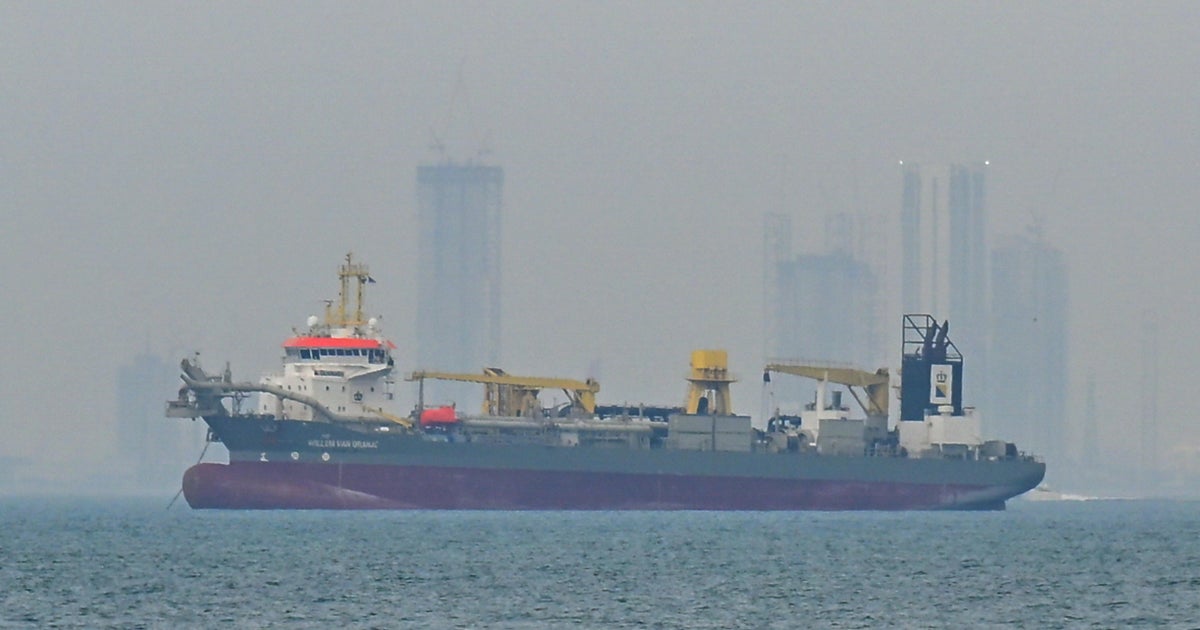
As concerns over the global oil supply intensify, President Trump has pledged that a little-known U.S. government agency will step in to insure ships sailing through the Persian Gulf, a move he said will maintain the “free flow of energy” as the Iran war continues.
The Trump administration has tapped the U.S. International Development Finance Corporation, or DFC, for the job, with the president noting on Truth Social that the agency will provide political risk insurance to “all shipping lines.” Mr. Trump also said the U.S. Navy would escort tankers through the Strait of Hormuz, a key artery for global oil shipments, if necessary.
The decision comes as other global insurers have backed away from underwriting maritime trade activity in the Gulf amid concerns that vessels could become collateral damage in the Iran war. Insurers such as NorthStandard, the London P&I Club, and the American Club have issued notices in recent days that they are suspending insurance for ships traveling through Iranian waters and the Gulf due to escalating risks from the war.
Disruptions to oil shipments are already driving up oil prices and pushing up costs at the gas pump.
Here’s what to know about the DFC and what the agency’s insurance promises could mean for American taxpayers.
What is the U.S. International Development Finance Corporation?
The DFC is a government agency established in 2019 to back global investment projects. It replaced the Overseas Private Investment Corporation, the U.S. government’s former development finance institution, which was established in 1971.
The agency is tasked with bringing “private capital to the developing world” by providing funding, insurance and debt financing to support projects across the energy, health care, critical infrastructure and technology sectors.
Its investments have ranged from as little as $793 to more than $2 billion, supporting projects such as railway upgrades, environmental restoration and the development of liquefied natural gas plants abroad.
The agency historically has provided funding to low-income countries where capital is scarce, according to Clemence Landers, vice president and senior policy fellow at the Center for Global Development, a nonprofit think tank focused on international development.
What is the DFC providing?
The DFC, which will underwrite policies for ships traveling through the Gulf, said in a Tuesday statement that it will provide support to commercial shipping charterers, shipowners and maritime insurance companies to minimize market disruptions.
The agency declined further comment.
Speaking to CNBC on Wednesday, Treasury Secretary Scott Bessent said Ben Black, the CEO of the DFC, has been preparing a contingency plan for “months.”
“We will be moving out to the ship owners, to the insurance brokers, over the coming days,” the Treasury secretary said.
DFC said it is “ready to mobilize its political risk insurance and guaranty products to stabilize international commerce and support American and allied businesses operating in the Middle East during this period of conflict with the Iranian regime.”
It’s unclear whether the insurance will extend solely to the U.S. fleet or include ships flying under other countries’ flags, a question raised by some lawmakers.
“This certainly looks like the United States will be subsidizing and protecting oil shipments to China,” Texas Rep. Joaquin Castro said in an X post on Tuesday.
The White House did not respond to a request for comment.
What is political risk insurance?
The DFC’s website lists political risk insurance as one of its main offerings, noting that the coverage can protect against asset and income losses incurred by war and hostile actions carried out by national and international forces.
In this case, however, the DFC’s use of political risk insurance represents a “profound departure” from the types of projects the agency has backed in the past, which are focused on economic growth in poor countries, Landers told CBS News.
She said DFC’s primary use of political risk insurance has been for what’s known as a “debt-for-nature swap,” in which the DFC backs a country’s external debt in exchange for commitments to carry out nature conservation projects.
How much will it cost, and who pays?
The DFC declined to comment on how much it will cost to underwrite policies for ships sailing in the Middle East. In his Truth Social post on Tuesday, Mr. Trump said the DFC will provide the insurance at a “reasonable price,” without offering a specific price point.
Landers said, given how high the risks are, she could see this eating up the agency’s risk exposure, which was $205 billion as of December 2025.
If there is a payout, Landers said American taxpayers could also be on the hook for hundreds of millions, if not billions, of dollars.
“Basically, this is the public sector subsidizing potentially a massive payout to private investors,” she told CBS News.