UK price of natural gas soars as Iran strikes spark WW3 fears | Personal Finance | Finance

The price of natural gas futures has shot up in the wake of Iran’s attacks on Gulf states (Image: Getty)
The price of natural gas futures has rocketed in the wake of the war between the US, Israel and Iran. Figures from Trading Economics show UK future prices for the fossil fuel leaping over 40% to £1.15 per therm on Monday (March 2). This is the highest level since February last year.
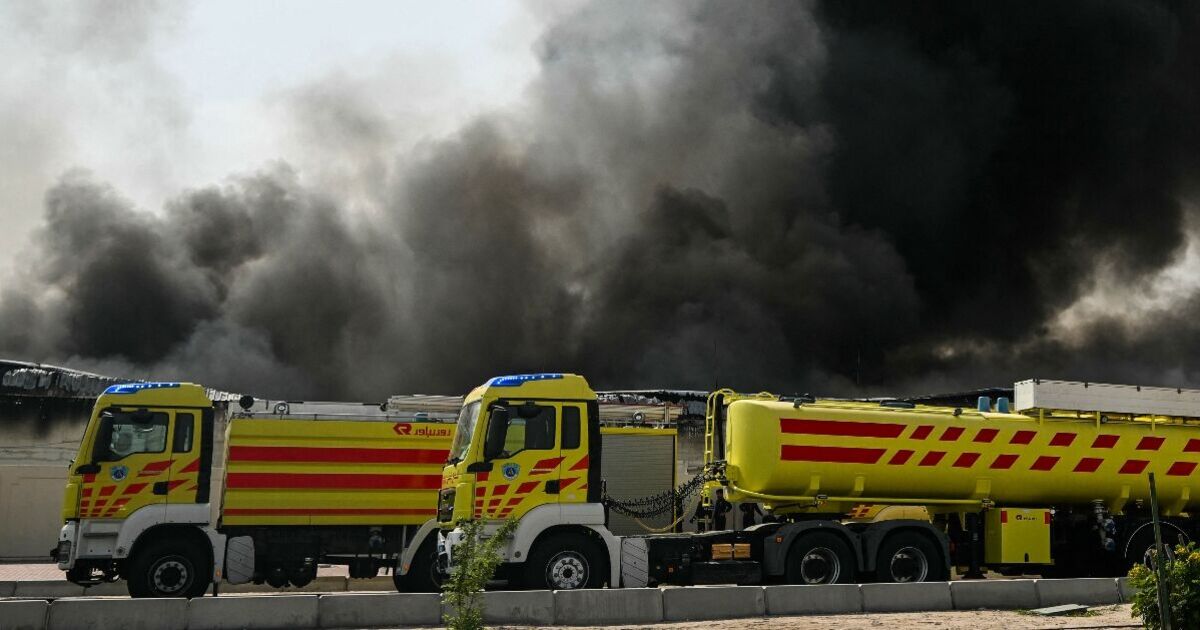
The surge came after Qatar’s state-backed energy company QatarEnergy said it “ceased production” because of attacks on its facilities. Gas prices in the UK are a key driver for the cost of domestic energy bills, indicating a sustained spike could affect households in the coming months. The price rise could lead the Bank of England to reconsider lowering interest rates at its next rate-setting meeting on March 19, a move which markets had widely been expecting before the conflict erupted on Saturday.
READ MORE: FTSE 100 takes a tumble and pound drops as oil price surges after Iran war
READ MORE: ‘I’m a pensions expert – do one thing to dodge fallout from Trump tariffs’
Julian Jessop, a Fellow at the Institute for Economic Affairs, told the Daily Express a sharp increase in oil and gas prices could mean inflation falls more slowly than expected, delaying any further interest rate cuts from the Bank.
He added: “However, the risks of a repeat of the surge in inflation following Russia‘s invasion of Ukraine are still small.”
Mr Jessop explained that one crucial difference is that the West buys relatively little from Iran.
The expert added: “Inflation soared back in 2022 because the Russia-Ukraine war disrupted the supply of many other products, including agricultural commodities and chemicals, not just energy.
“The latest crisis in the Middle East is also more likely to last for a few weeks than for many years.”
He said the biggest problem would come if Iran succeeded in disrupting the flow of oil, gas and other goods via the Strait of Hormuz, or managed to cripple energy production facilities in the rest of the Middle East.
Ensure our latest news headlines always appear at the top of your Google Search by making us a Preferred Source. Click here to activate or add us as Preferred Source in your Google search settings.

QatarEnergy says it ceased production because of attacks on its facility (Image: Getty)
Mr Jessop said: “But the imbalance of military power between Iran and the combined forces of the West and other Gulf States means that this is unlikely.
“Any serious attempt to harm so many neighbours would also be politically catastrophic for Iran and end any hopes that new leadership might still have some influence in the region in the future.”
Iran has reportedly warned tankers in the strait of Hormuz that no ships will be allowed to pass through. Meanwhile, UK Maritime Trade Operations Centre officials said two vessels have been struck near to the key trade artery.
About one fifth of the world’s oil supplies and seaborne gas is carried by tankers through the strait, making it a key, strategic gateway.
The price of Brent crude oil on Monday soared by as much as 13%, rising above $82 (£61.29) a barrel, before paring back. It was 8.4% higher at $79.2 (£59.20) a barrel shortly before 2pm.
Dan Coatsworth, Head of Markets at AJ Bell said financial markets typically prefer lower interest rates to higher ones and any prospect of rates staying put or even going up would be taken as a negative for share and bond prices.
He added: “A higher cost of borrowing would be negative for consumer and business sentiment, and feed into slower economic growth.
“While these scenarios will be front of mind, investors might be taking one day at a time while they try to ascertain if this is a short, sharp event or one that could drag on for ages.”
AJ Bell’s Danni Hewson, Head of Financial Analysis, said: “Oil prices are incredibly volatile and a fast resolution could see oil prices fall back quickly.
“But if oil prices stay high for a prolonged period of time, there is the potential for it to rekindle the cooling embers of inflation which made lives so miserable for so many at the peak of the cost of living crisis.”