
Trump told Netanyahu he would support Israeli strikes on Iran’s ballistic missile program, sources say
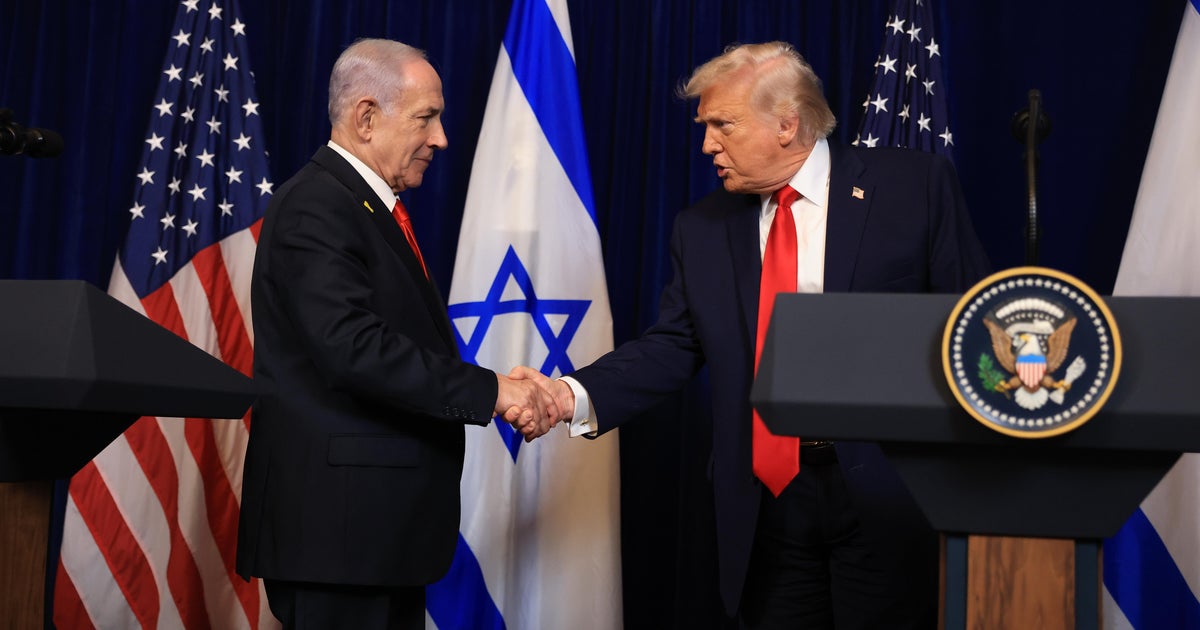
President Trump told Israeli Prime Minister Benjamin Netanyahu during a meeting at Mar-a-Lago in December that the president would support Israeli strikes on Iran’s ballistic missile program if a deal between Washington and Tehran could not be reached, according to two sources familiar with the matter who spoke to CBS News on condition of anonymity to discuss national security issues.
Two months later, CBS News has learned that internal discussions between senior figures in the U.S. military and intelligence community have started to contemplate the possibility of supporting a fresh round of Israeli strikes on Iran. American deliberations have focused less on whether Israel could act than on how the United States might assist, including the provision of aerial refueling for Israeli aircraft and the delicate matter of securing overflight permission from countries along the potential route, said two other U.S. officials with knowledge of the matter.
It’s not clear what countries would grant overflight permission for the U.S. to refuel Israeli aircraft for a potential strike. Jordan, Saudi Arabia and the United Arab Emirates have all publicly said they would not allow their airspace to be used for any strikes on Iran or Iranian strikes on any other country.
But the ongoing conversations inside the national security apparatus coincided with a visible show of force from the United States towards Iran. On Thursday, CBS News reported that a second U.S. aircraft carrier, the USS Gerald R. Ford and its flotilla of warships, would be dispatched to the Middle East, joining an already substantial American presence. Four U.S. officials said the carrier strike group is expected to redeploy from the Caribbean, a movement that would place formidable firepower within range of Iran at a moment of heightened strain.
All of it comes as the Trump administration pursues negotiations with Tehran over its nuclear program. Israeli Prime Minister Netanyahu remains openly skeptical of diplomacy with Iran and flew to Washington last Wednesday for talks with President Trump. Netanyahu released multiple statements insisting that any Iran accord include restrictions on ballistic missiles and funding of proxies in the region, issues that would extend any deal beyond the nuclear program itself.
Iranian officials have signaled a conditional willingness to curb some uranium enrichment in exchange for relief from punishing economic sanctions, but it is unclear what that looks like and talks have yet to produce any written agreement.
The U.S. and Iran are expected to hold a second round of nuclear talks in Geneva on Tuesday in an effort to reach a deal that prevents war. Iranian state media is reporting that Foreign Minister Abbas Araghchi and his delegation are on their way to Geneva for the indirect talks, according to the Associated Press.
U.S. Secretary of State Marco Rubio said Sunday that he has “made clear he prefers diplomacy” on Iran, and he confirmed that U.S. envoy Steve Wiktoff and Jared Kushner are traveling “to have important meetings” with Iran.
“We’ll see how that comes out,” he added.
Mr. Trump, speaking at the White House on Friday, framed the carrier deployment as prudent insurance if negotiations between the United States and Iran fail. By shifting additional naval power into the region, Mr. Trump appears intent on sharpening the leverage behind his demands.


