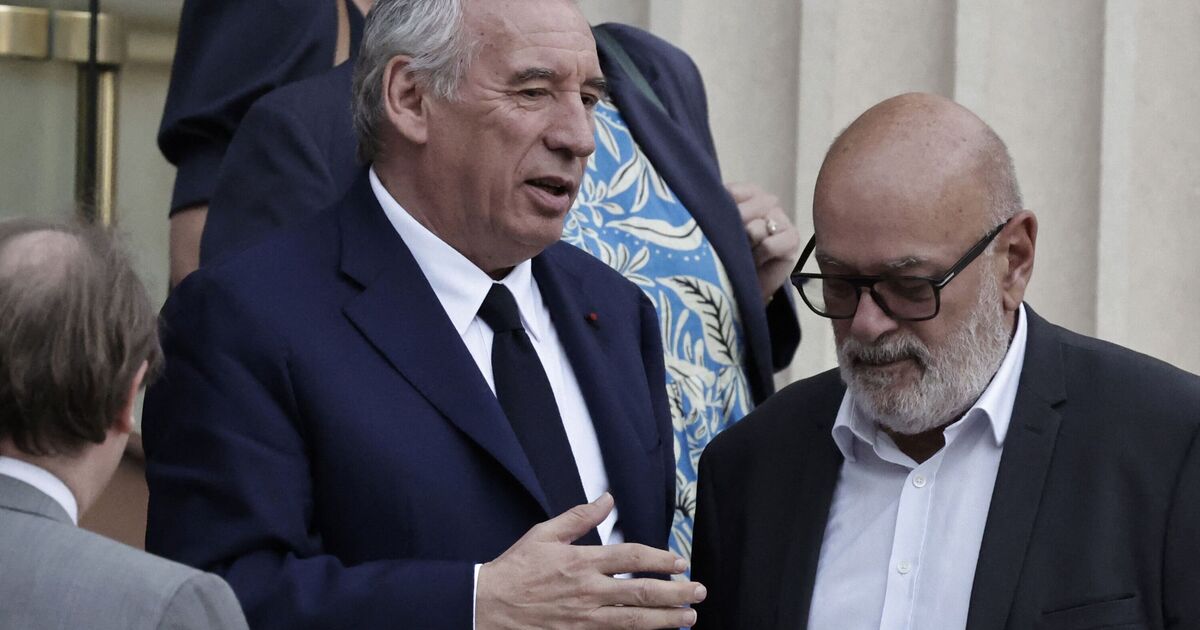
Nightmare for Macron as French government collapses | World | News
The French government has collapsed as MPs have voted to oust Prime Minister Francois Bayrou. France’s National Assembly has voted by 364 votes to 194 to oust him from office and bring down his minority government. Another 25 MPs abstained.
The prime minister now has to present Emmanuel Macron with the resignation of his government. Current reports are that he will do tomorrow morning. Macron can now either pick a new prime minister, a processs that took several weeks last year. Elysée Palace said Macron will appoint a new PM in a «matter of days». He could also call a new parliamentary election, which could potentially strengthen Marine Le Pen’s far right National Rally. He also has the option of calling a presidential election, in which he would not be able to run, as his second term is set to end in 2027.
A political analyst Alexandre Kouchner told BBC that even though Bayrou’s defeat was expected, the numbers surprisingly suggest that even those from within the central coalition, probably from the conservatives, voted against Bayrou. This points to the ongoing cracks and divides within the presidential coalition.
Macron is likely going to appoint a new prime minister, which would be the fifth since July 2024. However, a new prime minister would face the same difficulties with an intractable parliament. From Macron’s past statements, it looks unlikely that he would resign.
At 74, Bayrou became the fourth prime minister to serve under President Emmanuel Macron in just two years, a period marked by persistent political turmoil. His minority government, which had proposed €44bn (£38bn) in spending cuts to tackle France’s growing public debt, has now effectively collapsed.
In 2024, Macron’s political party Renaissance faced a major loss in the European Parliament vote. He then called a snap parliamentary election in hope to achieve a «clear majority». Instead, Macron’s gamble resulted in a divided parliament that has posed significant burdens for the president to pass bills and the yearly budget.
Macron first appointed the former EU Brexit negotiator Michel Barnier last September, but he was out within three months – the briefest tenure in France’s post-war Fifth Republic. Bayrou has now mirrored that outcome, leaving office just under nine months after his appointment last December.
France’s government is in debt as it has for decades spent more money than it has generated. It now has to borrow to cover its budget. As of September 2025, France’s national debt stands at approximately €3.346 trillion (£2.48 trillion). This constitutes roughly 114% of France’s GDP. Equalling to almost €50,000 per French citizen, it is the third highest public debt in eurozone. In the UK, public sector net debt was equivalent to 96.1% of GDP at the end of July 2025.
Yields on French government bonds – the interest rate demanded by investors – have risen above those of Spanish, Portuguese and Greek bonds, which were once at the heart of the eurozone debt crisis, CNN reported.
«Everyone spent enormous sums during the pandemic. But France has struggled, more than nearly everyone else, to bring its spending back down and, hence, to reduce its deficit. Successive budget plans have been announced and then shelved in the face of political resistance,» Ed Conway, economics and data editor at Sky News, wrote.
Bayrou wants to slash the deficit by redefining generous social programmes such as state pensions. This has been widely opposed especially by politicians on the left who are calling for tax raises rather than budget cuts. Macron will now face pressure to name a leftist successor as the last two prime ministers were from the right and centre. A possible option is Olivier Faure who leads the Socialist Party and has 66 deputies in the National Assembly. Two other names from the left include former PM Bernard Cazeneuve, and the veteran ex-minister Pierre Moscovici. If Macron sticks with the centre and right, his first option would likely be the current defence minister Sebastien Lecornu.
«You have the power to bring down the government, but you do not have the power to erase reality,» Bayrou said on Monday ahead of the vote.
He added: «Reality will remain relentless: expenses will continue to rise, and the burden of debt, already unbearable, will grow heavier and more costly.»
We’ll be bringing you the very latest updates, pictures and video on this breaking news story.
For the latest news and breaking news visit: /news
Stay up to date with all the big headlines, pictures, analysis, opinion and video on the stories that matter to you.
Follow our social media accounts here on facebook.com/DailyExpress and @daily_express