
Major update as bombshell report claims Russian ship was carrying deadly nuclear cargo | World | News
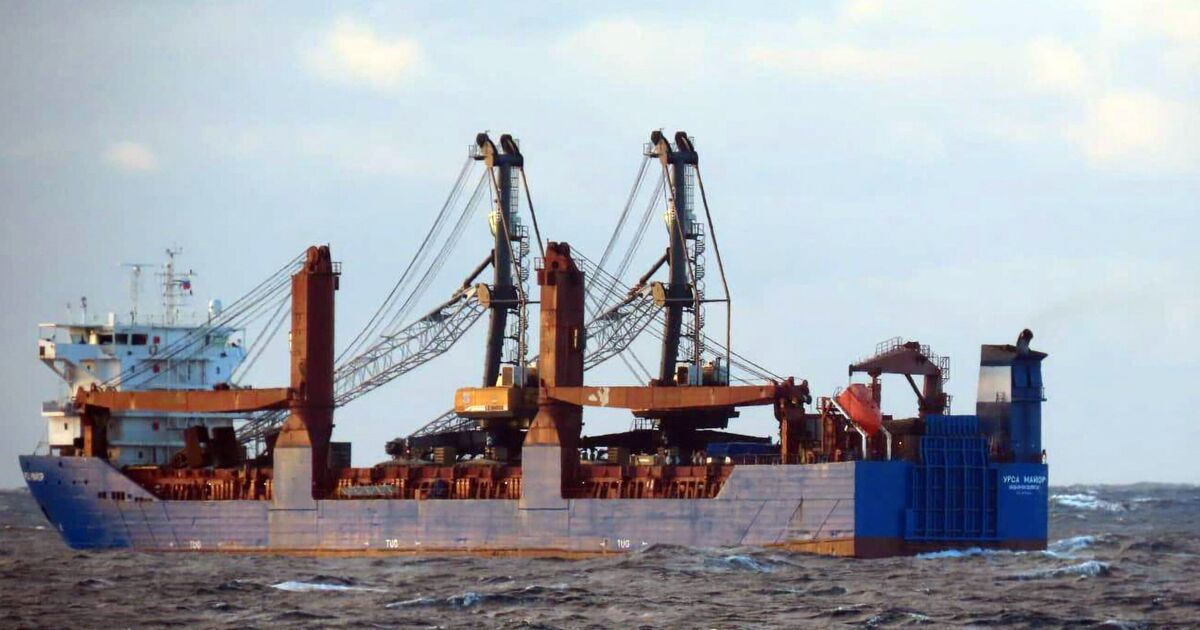
A year after the Russian cargo ship Ursa Major sank in the Mediterranean, Spanish investigators have uncovered evidence that it was secretly transporting nuclear submarine reactor components potentially destined for North Korea. The sanctioned vessel, operated by Oboronlogistika – an affiliate of the Russian Ministry of Defence – went down on December 23, 2024, following a series of explosions approximately 57 miles off the coast of Almeria, Spain.
Spanish rescue services evacuated 14 of the 16 crew members to the port of Cartagena, but two sailors remain missing and are presumed dead. Initially, Russian authorities and the ship’s owner claimed the Ursa Major was carrying two large crawler cranes and hatch covers for the Rossiya, a new nuclear-powered icebreaker under construction, with Vladivostok listed as the destination.
However, reports published on Sunday by Spanish newspaper La Verdad and The Maritime Executive cite Spanish national authorities who determined that the two large, blue-tarped objects on the vessel’s stern were not parts of an icebreaker.
Their exceptional weight, density, and lead shielding were consistent with unfueled VM-4SG Soviet-era naval reactor casings – critical components designed for nuclear-powered submarines.
Investigators believe these reactor parts were intended not for Vladivostok, but for North Korea, where they could support Pyongyang’s expanding nuclear ballistic-missile submarine programme.
Analysts note that North Korea recently displayed significant progress on its first 8,700-ton nuclear submarine hull, and Russia may owe a debt to the regime for supplying vast quantities of artillery shells used in the war in Ukraine.
The cause of the sinking has also shifted dramatically from the original narrative of engine room failure. Captain Igor Vladimirovich Anisimov initially described the cargo as icebreaker components.
When pressed further by investigators, he reportedly requested time to consider his response before claiming the heavy, shielded objects – each weighing around 65 tons – were merely «manhole covers.»
Later, the captain acknowledged a 20-inch hole in the hull with edges bent inwards, indicating an external kinetic impact rather than an internal explosion.
The shipowner had reported three successive blasts on the starboard side. These details suggest possible sabotage or an underwater strike intended to prevent the sensitive cargo from reaching its intended destination.
The vessel’s route through the Mediterranean, far from the direct path to Vladivostok, and its history of military logistics further fuelled suspicion. The Ursa Major, formerly known as Sparta III, had been sanctioned by the United States for transporting military equipment.
In January 2025, the Russian oceanographic research ship Yantar – widely regarded as a spy vessel – visited the wreck site. Equipped with deep-sea submersibles and drones, its presence now appears linked to efforts to recover or destroy evidence of the reactors resting on the seabed.
The incident appears to transform what was dismissed as a routine maritime accident into evidence of alleged state-sponsored nuclear proliferation.
The transfer of reactor technology would violate international sanctions and raise grave concerns over escalation in nuclear capabilities amid ongoing geopolitical tensions. Spanish authorities continue to lead the inquiry, though no official response has yet come from Moscow or Pyongyang.


