Indie games are turning the act of looking into an art
Adriaan de Jongh and Sylvain Tegroeg did not necessarily set out to create a new genre. But, in some ways, that’s exactly what the duo did when they released Hidden Folks in 2017. Hidden object games have been around for decades — they’ve existed well before computers, when people searched for objects in paintings and printed drawings — but Hidden Folks was a distinct step forward. De Jongh calls Hidden Folks a “searching” game; objects are certainly hidden, but the game is more than just spotting objects.
“We wanted to make a very playful, interactive game where our focus was invoking this curiosity for these little worlds and the little stories that unfolded,” de Jongh, who intends to expand the Hidden Folks universe in a new collaboration with Tegroeg, told The Verge. “That was always the vision for the game, and all design decisions we made tried to cater to that sense of exploration.”
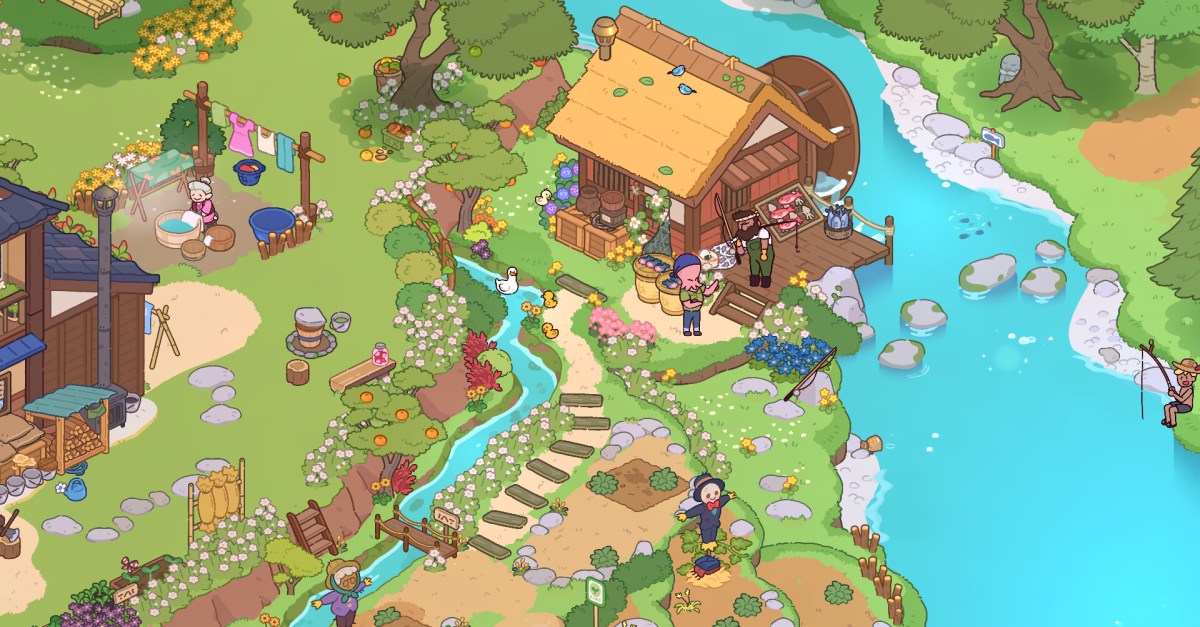
In the years that followed the game’s release, dozens of Hidden Folks-likes were created. Some of them are clones that copy the art style and even assets in a way that makes de Jongh uncomfortable. Many of those games may scratch the itch of wanting to find things, but they lack the delight of a game like Hidden Folks. The searching genre has also emerged as a way for developers to inject story and, again, curiosity into hidden object games. It’s easy to draw a line from Hidden Folks to the likes of “interactive city discovery game” Small Life, mystery game Wind Peaks, history discovery game Hidden Through Time, and, now, the adventure hidden object game Lost and Found Co.
The concept of Hidden Folks is simple: Search through pen-and-ink artist Tegroeg’s expressive, detailed worlds for a list of items displayed on the bottom of the screen. You are not to click and move along, but search — click on things to see what happens, what developer-made “mouth sound” you hear. Maybe you’ll uncover what you were looking for. Maybe you won’t. Every little detail in Hidden Folks is charming, crafted from hours of intense playtesting, de Jongh said.
Lost and Found Co., created by Thailand-based studio Bit Egg, is a delight that feels similar to Hidden Folks. It’s about finding lost objects while working for a dragon goddess. It’s set in colorful, magical worlds that are filled with thousands of different objects and characters. Little stories are everywhere, and poking around the different spaces is sure to uncover secrets. It is clearly inspired by Hidden Folks, and Bit Egg cofounder and CEO Richmond Lee said as much in an interview with The Verge. The hint system, a defining factor of Hidden Folks-likes, is an homage to de Jongh and Tegroeg’s game, but also the way in which Bit Egg is trying to elevate the hidden object genre behind static images.
Lost and Found Co.’s worlds — an antique store stuffed to the brim with haunted items, a chaotic family home in the midst of their morning routine, or a lush vacation spot where tourists get silly on smoothies — are elaborately built to tell stories. There’s the overarching story and little ones playing out in every corner or nook. Bit Egg has put lots of little references to pop culture in Lost and Found Co.; one of my favorites that I’d uncovered is a haunted doll that’s a reference to the real-life one that inspired the Annabelle horror movie, and which is locked up in an occult museum near my hometown.
“When we looked at a lot of the hidden object games that are out there, they’re very gameplay-focused,” Lee said. “They have a theme, they give you a lot of content, but there’s not much in the way of characters and story. That’s something we wanted to push.”
Lost and Found Co.’s characters, the dragon goddess Mei and her startup intern Ducky (who she turns into a human from an actual duckling), lead players through its story. A mysterious figure is stealing from the townspeople, and the duo’s ability to find things is restoring the people’s faith in the goddess, who’d fallen out of favor in modern times. That’s the story that pulls together the separate levels; everywhere, in all parts of town, people need help finding their stuff. Sometimes, it’s ingredients to make a smoothie, other times it’s personal items moved around an apartment complex. There are always extras, too — the little bits that reward a player for being curious. I found a submerged submarine, for instance, after I clicked four disparate lampposts into the correct spot, triggering the sub to come up for air.
What makes a good hidden object game, both de Jongh and Lee agree, is playtesting. You can have a great art style, clever sounds, and a nice story, but if the game doesn’t work well, it won’t click with players. “It took us years, and it was just trial and error,” Lee said. “Someone who makes a level has a very hard time understanding how difficult or easy it might be for someone else. You just have to keep workshopping and testing.” Playtesting is what made Hidden Folks so satisfying to play. De Jongh said it’s core to what he does as a game developer. “You put it in front of someone and you will learn a million things,” he said. “I think I’ve watched over 200 to 300 hours of players playing the game and changing little things based off what I saw players do.”
There’s an art to placing the hidden objects in the environments, to be sure: Lee said Bit Egg designs a level first with concept art before remaking it as an isometric level, then putting it into the game engine. “We basically draw everything three times,” he said. It’s a different process than how de Jongh and Tegroeg built Hidden Folks, starting with Togreog’s ink drawings on paper, which are put on one big page and scanned into the computer, then assembled in the game engine.
“He draws everything, we scan it in, and throw it into the game engine,” de Jongh said. “There, he, one by one, drags everything into the right position.” It’s a task that’s time consuming and exceptionally precise; Hidden Folks’ massive factory level is a testament to that. It features hundreds of little boxes of different kinds. Animations come later, replacing certain static pieces.
All of that effort goes toward something that feels very inherently human: the act of looking. Lee said one could even consider old Chinese and Japanese paintings as hidden object games. You might not be searching for anything specific, but the elaborate, detailed nature of these paintings often lead to little discoveries the further you look. “There’s a really long history of people being captivated by these neat little scenes,” he said.