Get out fast – Gulf states to run out of air defences in a week | World | News

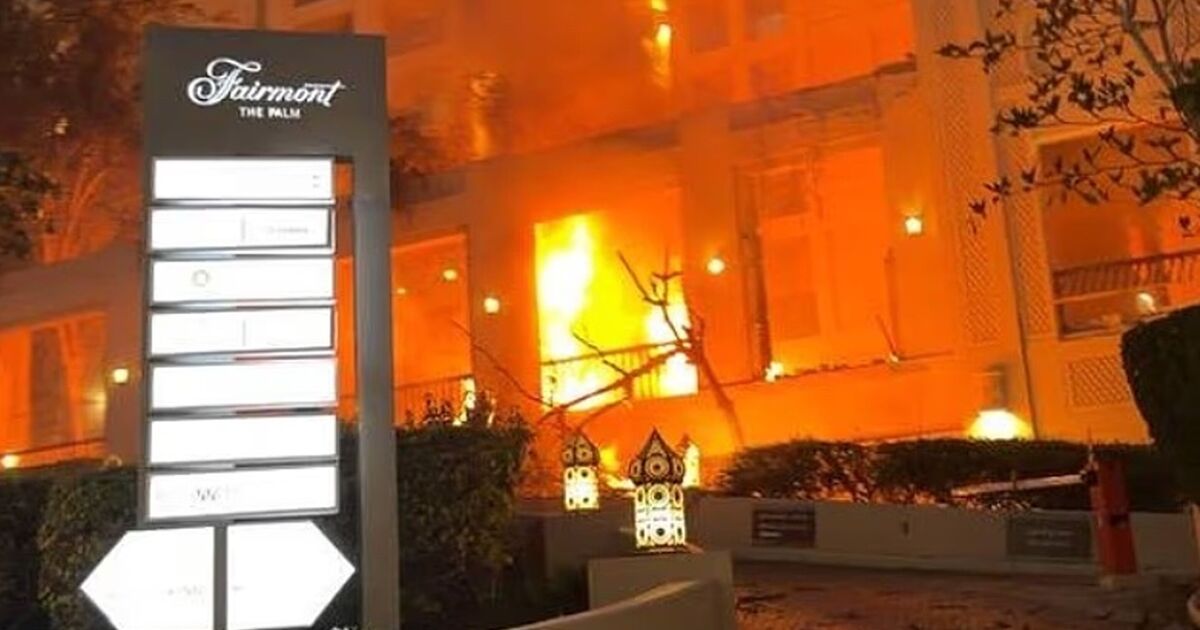
The countries of the Gulf are burning through their air defence stockpiles at a pace (Image: X)
The countries of the Gulf are burning through their air defence stockpiles at a pace that experts say cannot last, raising the alarming prospect that Iranian missiles and drones will soon face little resistance as they rain down across the region.
Tehran unleashed hundreds of ballistic missiles and kamikaze drones after the US and Israeli assault on Iran, and the sustained effort required to intercept them has placed enormous strain on the American-supplied defence systems protecting cities across Qatar, Kuwait and Bahrain.
A missile expert at the University of Oslo put a number on how long that can continue. “The intensity of interceptor usage that we have seen over the last couple of days can’t be maintained for more than another week – probably a couple of days at most, and then they will feel the pain of interceptor shortage,” said Fabian Hoffmann in an interview with reporters.
Read more: US commanders tell troops Trump was ‘anointed by Jesus’ for Iran war
Read more: Trump allies warn ‘overwhelming’ wave of strikes will hit Iran within days
The scale of the assault
The figures coming out of the UAE illustrate the ferocity of Tehran’s campaign, according to a Telegraph report. By Monday evening, the country had reportedly absorbed 174 ballistic missiles, eight cruise missiles and 689 drones across three days of bombardment. None of the missiles are reported to have broken through, though 44 drones found their mark.
The Express reported Bahrain has had 70 ballistic missiles fired at it. Monday brought fresh blows — Iranian drones struck the US embassy in Kuwait and hit Qatar’s principal liquefied natural gas facility.
The mathematics of missile defence make the situation particularly precarious. According to the reporte, bringing down a single incoming ballistic missile demands two to three interceptors from systems such as Patriot and Thaad, regardless of cost. Tehran’s arsenal is estimated to contain upwards of 2,000 missiles within range of Gulf territory, and unlike the US, Iran has yet to develop weapons capable of crossing oceans.
How many interceptors remain in position across the region is a state secret, but available estimates paint a worrying picture — it has been widely reported, the UAE may have fewer than 1,000, Kuwait’s reserves sit at roughly 500 and Bahrain’s at around 100. The problem is compounded by the fact that Gulf forces have been deploying their costly Patriot batteries against Iran’s cheap Shaheed drones, burning through expensive ammunition to neutralise a low-grade threat.
American supplies under scrutiny
Questions about whether Washington’s own weapons reserves can absorb a prolonged conflict have been growing louder. Trump has waved them away. “As was stated to me today, we have a virtually unlimited supply of these weapons. Wars can be fought ‘forever’, and very successfully, using just these supplies,” he posted on Truth Social.
In the same breath, he acknowledged that stocks of premium weapons were “not where we want to be” — a rare concession that suggested the picture was not quite as rosy as his public messaging implied.
One response under consideration is pulling air defence hardware currently stationed in the Far East — where it forms part of the deterrent against China — and sending it to the Middle East instead, according to reporting from South Korean media.
On the offensive side, US and Israeli forces have been methodically picking off Iranian launch infrastructure in an attempt to choke off the supply of incoming fire at its source. Dozens of systems have been put out of action, intelligence officials say.