Gas prices surge as oil tops $100 a barrel. Here’s how much Americans are paying.
Gasoline prices in the U.S. continued climbing on Monday after the U.S.-Israeli war with Iran pushed oil prices above $100 per barrel, the highest since 2022.
The average national cost of gas is now $3.48 per gallon, up 48 cents since last week and 58 cents from a month ago, according to data from AAA. That remains considerably lower than during the pandemic, when a disruption in oil supplies pushed the cost of regular gas up to $5.02.
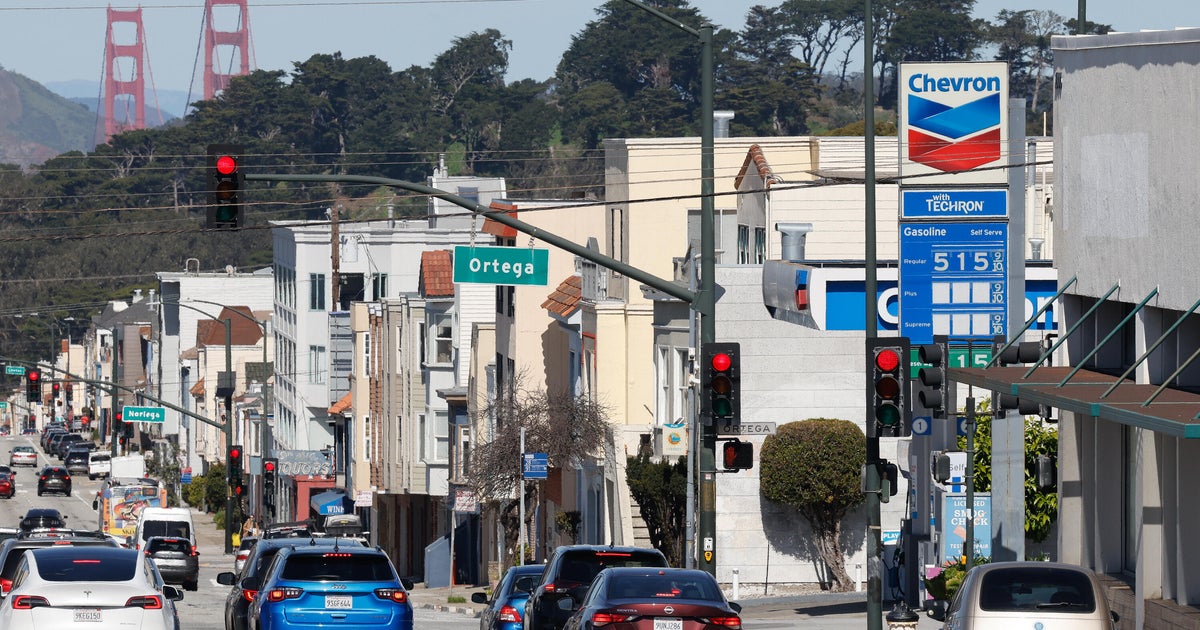
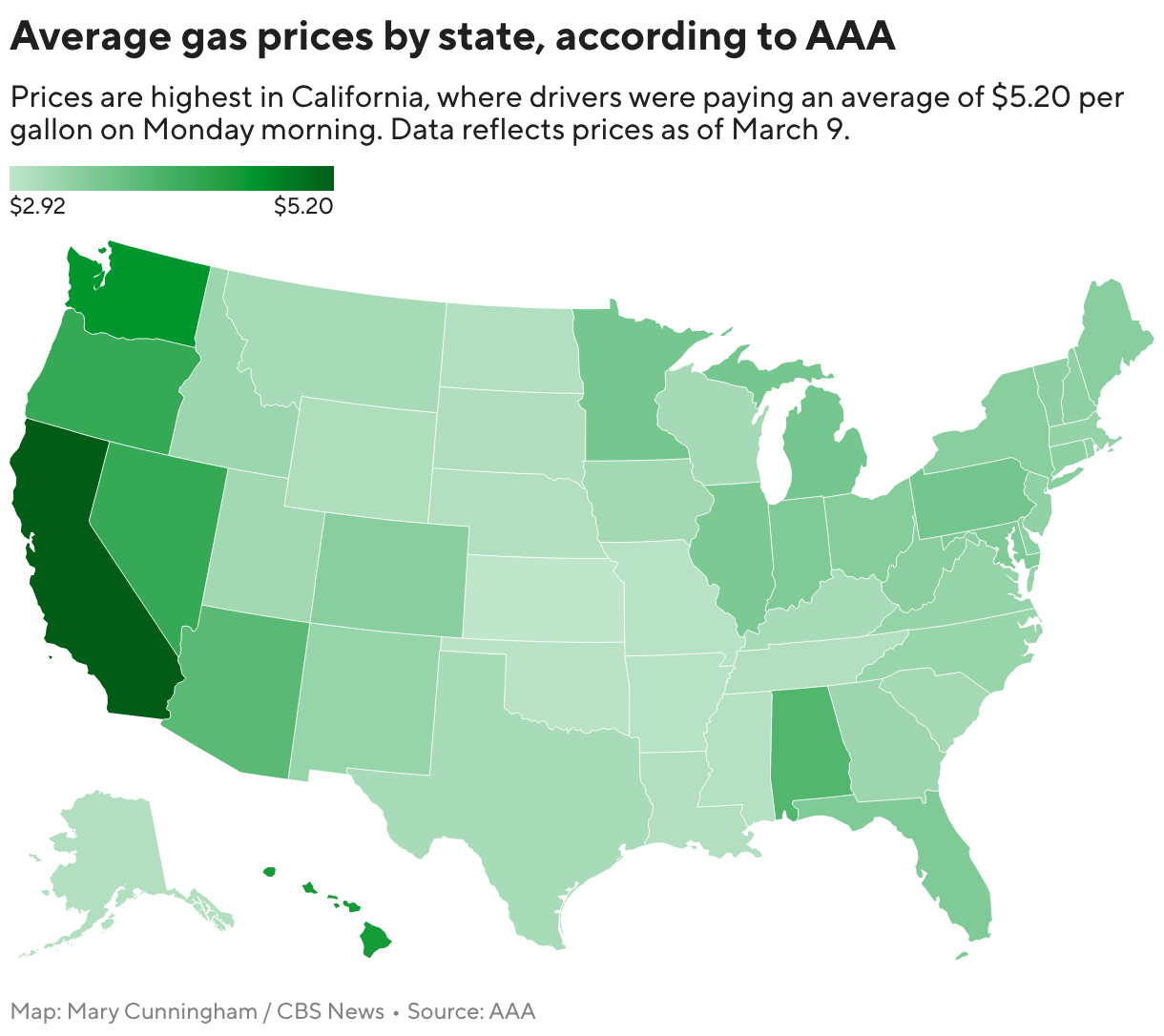
Prices are currently highest in California, where drivers were paying an average of $5.20 per gallon on Monday morning, and in Washington state, where gas hit $4.63 per gallon. Kansas has the country’s lowest average price, at $2.92 for a gallon of regular.
The price of diesel, which has a tighter inventory than regular gas, has also skyrocketed, rising nearly 89 cents over the last week to $4.66 a gallon.
Fuel prices have jumped as the Iran war disrupts the flow of oil through the Strait of Hormuz, the key channel that connects the Persian Gulf to the Gulf of Oman and the Arabian Sea.
JPMorgan says high gas prices could persist
Even if oil production and distribution resume relatively quickly, U.S. gas prices could stay elevated until the fall due to higher seasonal demand this summer, David Kelly, chief global strategist at J.P. Morgan Asset Management, said in a note to clients Monday.
West Texas Intermediate, the U.S. benchmark, and Brent crude, the international benchmark, both jumped around 30% over the weekend to nearly $120 a barrel, before falling to around $100 per barrel on Monday.
“With additional attacks across the Middle East over the weekend pushing oil above $100 per barrel for the first time in years, fuel markets are now rapidly recalibrating to the risk of prolonged disruption to global supply flows,” GasBuddy petroleum analyst Patrick De Haan said in a report Monday.
In many states, gas prices could rise an additional 20 to 50 cents per gallon this week, De Haan also predicted.
The cost of oil accounts for roughly 60% of the price of gas, according to industry figures, with taxes, local fees and other factors also affecting prices at the pump.
All eyes on Hormuz
The Eurasia Group, a political risk consultancy, forecast in a report on Monday that the price of crude will remain elevated — potentially reaching above $120 per barrel — until security in the Strait of Hormuz improves and tanker traffic resumes.
David Oxley, chief climate and commodities economist at Capital Economics, said in a note to investors: “From an energy market perspective, the impact on energy flows from the Middle East will be dictated by two key variables: a) how long the Strait of Hormuz remains closed, and; b) the extent to which potential damage to energy infrastructure in the region constrains energy exports in the future, even when/if shipping through the strait resumes.”
To alleviate oil supply pressures, President Trump last week announced that the U.S. International Development Finance Corporation will insure ships sailing through the Persian Gulf. The government agency said it will insure losses “up to approximately $20 billion on a rolling basis,” although it remains unclear when it will start extending the maritime reinsurance.
Mr. Trump said in a social media post on Sunday that he expects only a “short-term” increase in oil costs and that the rise is “a very small price to pay for U.S.A., and World, Safety and Peace.”