5 things you need to know about death of Iranian leader Khamenei | World | News

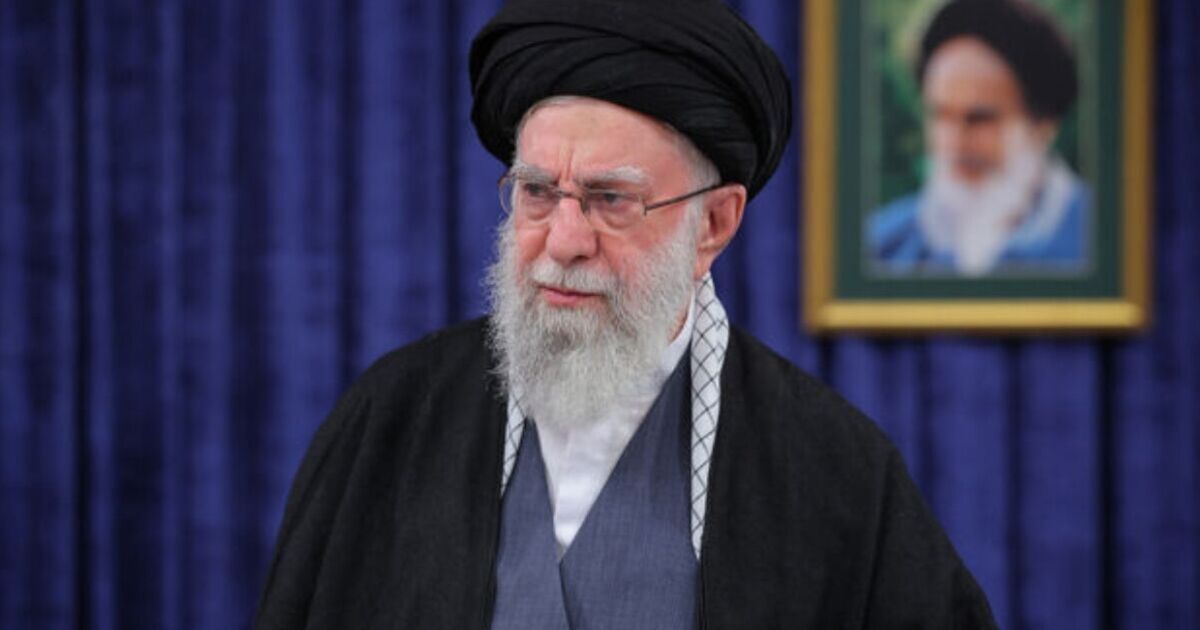
Ayatollah Ali Khamenei has been killed (Image: Getty)
Iran’s Supreme Leader Ayatollah Ali Khamenei was killed in a blistering attack on the Islamic Republic by Israel and the United States. His death throws the country’s future into doubt and raises the risk of further instability in the Middle East. Iranian state television and the state-run IRNA news agency announced the 86-year-old’s death early on Sunday. US President Donald Trump had announced his death hours earlier. He said it gave Iranians their “greatest chance” to “take back” their country.
The announcements came after a joint US and Israeli aerial bombardment targeted Iranian military and government sites. Mr Trump said the “heavy and pinpoint bombing” would continue through the week or as long as necessary. The strikes opened a stunning new chapter in US intervention in Iran, marking the second time in eight months that the Trump administration has attacked the country during talks over its nuclear program.
READ MORE: Khamenei dead as picture of Iran dictator’s body shown to Donald Trump
READ MORE: Iran vows to retaliate with ‘most ferocious’ attack in history after leader dead

Protesters took to the streets of Baghdad (Image: Getty)
What happened to Khamenei?
Iranian state TV reported Ayatollah Khamenei was killed early on Saturday morning while he was at his office in Tehran, carrying out “tasks”.
Tasnim News Agency, which is affiliated with the Islamic Revolutionary Guard Corps, said the Supreme Leader’s death proved reports he was in hiding were “psychological warfare”.
State TV reported that Iran’s Supreme National Security Council blamed the US and Israel for Khamenei’s death.
One of the first joint US-Israeli strikes hit near Khamenei’s offices. Satellite images showed the badly damaged complex in Tehran.
Khamenei’s daughter, son-in-law and grandchild were killed as well, with reports one of the leader’s daughters-in-law also died.
Iran will mark 40 days of mourning for Khamenei, who was 86 and had ruled over the country since 1989 when he succeeded the founder of the Islamic Republic, Ayatollah Ruhollah Khomeini.
Ensure our latest news headlines always appear at the top of your Google Search by making us a Preferred Source. Click here to activate or add us as Preferred Source in your Google search settings.

Iranians mourn the supreme leader’s death (Image: Getty)
Who was Khamenei?
Ayatollah Khamenei held ultimate authority in Iran. He was born in the city of Mashhad in 1939. A religious scholar’s son, he joined the opposition movement led by Ayatollah Khomeini in 1962.
After the last Shah of Iran, Mohammad Reza Pahlavi, was deposed in 1979, Khamenei became deputy defence minister.
In the role, he helped organise the Islamic Revolution Guard Corps, which is a key part of the Iranian Armed Forces.
Khamenei was chosen to be supreme leader by the 88-members-strong Assembly of Experts when Khomeini died in 1989. Before then, he led Iran in the eight-year long war with Saddam Hussein’s Iraq.
With his absolute power Khamenei maintained an iron grip on Iran, with at times violent suppression of challenges to the regime.
A Holocaust denier, Khamenei wanted Israel to be eliminated. He spread Iran’s influence across the Middle East, sponsoring terror groups including Hezbollah in Lebanon and the Houthis in Yemen.

Iranians demonstrate in Qom (Image: Getty)
How have countries reacted to Khamenei’s death?
Khamenei’s death has been celebrated by some and sparked angry protests among others.
As reports trickled out about Khamenei’s death, eyewitnesses in Tehran told said some residents were rejoicing, cheering from rooftops, blowing whistles and letting out ululations.
Mourners raised a black flag over the Imam Reza shrine in Mashhad and the Iranian government declared a seven-day nationwide public holiday to commemorate Khamenei’s death.
Iran’s parliament speaker on Sunday called the leaders of the United States and Israel “filthy criminals” who will face “devastating blows” for their attacks on the Islamic Republic.
About 500 Shiite Muslims stormed the US Consulate in Pakistan’s port city of Karachi on Sunday, smashing windows hours after Khamenei’s death. Authorities said at least six people were killed in clashes with police.
Protesters took to the streets of Baghdad on Sunday to denounce the killing of the Supreme Leader. Dozens of people tried to cross a bridge leading to the city’s heavily fortified Green Zone, which houses Iraqi government buildings and the sprawling US Embassy.
Mr Trump warned Iran on Sunday not to escalate its attacks, writing online that American forces will strike back “WITH A FORCE THAT HAS NEVER BEEN SEEN BEFORE!”.
A group of about 200 people waving Australian, American, Israeli and old Iranian flags chanted and danced outside the Iranian Embassy in Canberra, Australia’s capital.

Masoud Pezeshkian sits on the council tasked with choosing a new supreme leader (Image: Getty)
What happens next?
The killing of Khamenei after decades in power appeared certain to create a significant leadership vacuum, given the absence of a known successor and because the supreme leader had the final say on all major policies.
Iran’s paramilitary Revolutionary Guard on Sunday threatened to launch its “most intense offensive operation” ever, targeting Israel and US bases in the region.
A council has been formed to govern Iran after the killing of Iran’s Supreme Leader. That council is enshrined in law in the Islamic Republic.
It is made up of Iran’s sitting president, the head of the country’s judiciary and a member of the Guardian Council chosen by Iran’s Expediency Council, which advises the supreme leader and settles disputes with parliament.
Iran’s reformist President Masoud Pezeshkian and hard-line judiciary chief Gholamhossein Mohseni Ejei are on it. Iranian law says the Assembly of Experts “must, as soon as possible” pick a new supreme leader.

Members of Ali Khamenei’s family also died in the attack (Image: Getty)
Who might replace Khamenei?
Deliberations about succession take place far from the public eye, making it hard to gauge who might be a top contender.
Previously, it was thought Khamenei’s protégé, hard-line President Ebrahim Raisi, may try to take the mantle. However, he was killed in a May 2024 helicopter crash.
This leaves one of Khamenei’s sons, Mojtaba, a 56-year-old Shiite cleric, as a potential candidate. However, he has never held government office.
A father-to-son transfer in the case of a supreme leader could spark anger, not only among Iranians already critical of clerical rule, but also among supporters of the system.
Some may see it as un-Islamic and in line with creating a new, religious dynasty after the 1979 collapse of the US-backed Shah Pahlavi government.